

How Much Money Do We Spent On Stem Cell Research


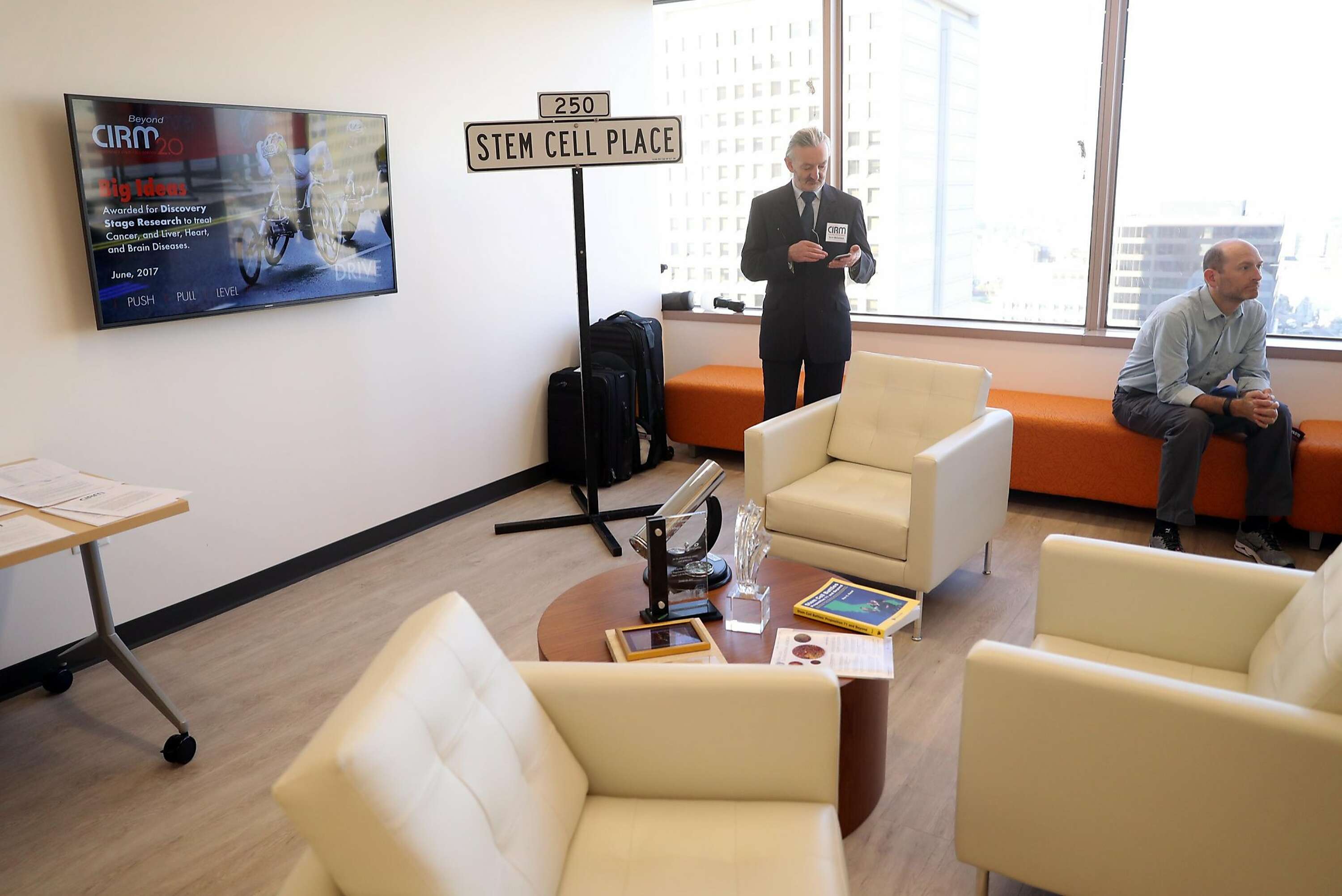
Kevin McCormack (center), spokesman for the California Institute for Regenerative Medicine, waits in the lobby of the bureau'southward Oakland role during a meeting of the governing board.
Lofty promises, limited results
After fourteen years and $three billion, has California's bet on stem cells paid off?
Sept. half-dozen, 2018
Information technology was an boggling political proposal: Approve a $3 billion bond measure to fund the cutting-edge scientific discipline of stalk prison cell therapy, and soon some of the earth's cruelest diseases and most disabling injuries could exist eradicated.
The 2004 measure was Proposition 71, the California Stem Cell Research and Cures Initiative. The campaign to laissez passer it was led by a Palo Alto existent manor programmer whose son suffered from an incurable disease that he believed stem cells, the keystones of human biology, could heal. Other supporters included preeminent scientists, Hollywood celebrities, business leaders and elite investors.

The Miracle Cell
This serial explores the promise and reality of the revolutionary science of stem cell therapy. Information technology focuses on what has transpired since 2004, when California voters approved a $3 billion bond measure to fund stalk prison cell enquiry with the promise that information technology before long would produce new treatments for incurable diseases.
In four parts, it follows the stories of patients desperately seeking remedies; probes the for-profit clinics where unproven and unregulated treatments are existence offered; takes you into the labs and hospital rooms where scientists are testing new therapies; and provides a comprehensive accounting of what California's multibillion-dollar bet on stem cells has achieved.
The need was urgent, they said. Federal restrictions had recently been imposed on funding research involving man embryonic stem cells, then the most cheering bailiwick.
Among the campaign'southward promises: Most half of all families in California could do good from stalk prison cell treatments Prop. 71 would help create. 1 report it commissioned found that new, life-changing therapies could emerge in just a few years. And Prop. 71 would pay off financially, the entrada claimed, creating thousands of jobs and potentially returning the land'south investment more than 7 times over.
"How many chances in a lifetime practice you lot have to impact human suffering in a really fundamental way, including perchance even in your own family?" Robert Klein, the entrada leader, would say shortly after the vote.
In November 2004, Prop. 71 passed with nigh sixty percentage approval. It created the California Found for Regenerative Medicine, or CIRM, an bureau tasked with administering the $iii billion and making the entrada'due south lofty visions a reality.
Fourteen years later, the money voters approved is nearly gone, and supporters of CIRM and the research it funds are preparing to ask the public for another $v billion in 2020. This time, taxpayers will want to know: Has California's initial bet on stem cell science paid off?

Robert Klein greets people during a meeting of the governing lath of the California Constitute for Regenerative Medicine. Klein led the campaign that created CIRM and after served equally chairman of the board for seven years.
Over the past several months, The Chronicle conducted an all-encompassing analysis of CIRM'southward spending, reviewing the well-nigh i,000 grants the bureau has made, tracking how the money has been spent, and gauging whether the promises take been realized.
It's not a question that can exist answered merely. Science often can't be measured in quantifiable outcomes. Failures aren't just mutual, they're necessary — it's incommunicable to expect every dollar invested in enquiry to lead downward a traceable path toward success.
CIRM can take credit for some notable progress.
It has helped make California a global leader in the field that's come to be known as regenerative medicine. Anywhere significant stalk prison cell research is taking place in the state, it almost surely has received support from CIRM.
Nigh the science
The inquiry involves stem cells culled from donated bone marrow tissue. The stem cells are genetically engineered in a lab, then transplanted straight into patients' brains. The genetic engineering causes the stalk cells to behave in a way that reverses damage done to native neural cells in the brain — scientists even so aren't clear exactly how. In early clinical trials, several patients take reported significant recovery, including regaining the use of arms, legs and speech communication.
About the science
The procedure to care for alpha thalassemia major — a disease that is often fatal earlier or shortly afterward nascence — involves transplanting stalk cells from the mother into the babe'due south bone marrow while it's in the womb, during the second trimester. The hope is that the female parent'due south healthy stalk cells will knock out the unhealthy cells in the growing fetus and reverse the affliction. So far, 1 babe — a girl born at UCSF Medical Eye at Mission Bay in February — has been treated.
Editor'southward note: Click on highlighted text to larn more well-nigh CIRM-funded science.
At UCLA, doctors are using stem cells to cure a rare allowed deficiency disease that kills children. At Stanford, early studies show that stalk cells deposited deep into the brain could restore motion and speech to people devastated by stroke. At UCSF, a team is start human trials for a fatal genetic blood disease that involves transplanting stem cells into a fetus still in the uterus.
But every bit thrilling as such advances are, they fall far short of what Prop. 71's promoters promised.
Not a single federally canonical therapy has resulted from CIRM-funded science. The predicted financial windfall has non materialized. The bulk of CIRM grants have gone to bones research, training programs and building new laboratories, not to clinical trials testing the kinds of potential cures and therapies the billions of dollars were supposed to deliver.
Over that same time, many people suffering from incurable diseases accept become impatient waiting for scientists to produce the phenomenon treatments the Prop. 71 campaign said were within reach.
Instead, a thriving, for-profit manufacture of clinics offer dubious stem cell therapies based on half-broiled science has sprung upwards, defying attempts at government regulation and requests from scientists to proceed charily.
Now, as CIRM supporters prepare to approach voters again, some say its achievements shouldn't be measured only against the claims made past the campaign that created it.
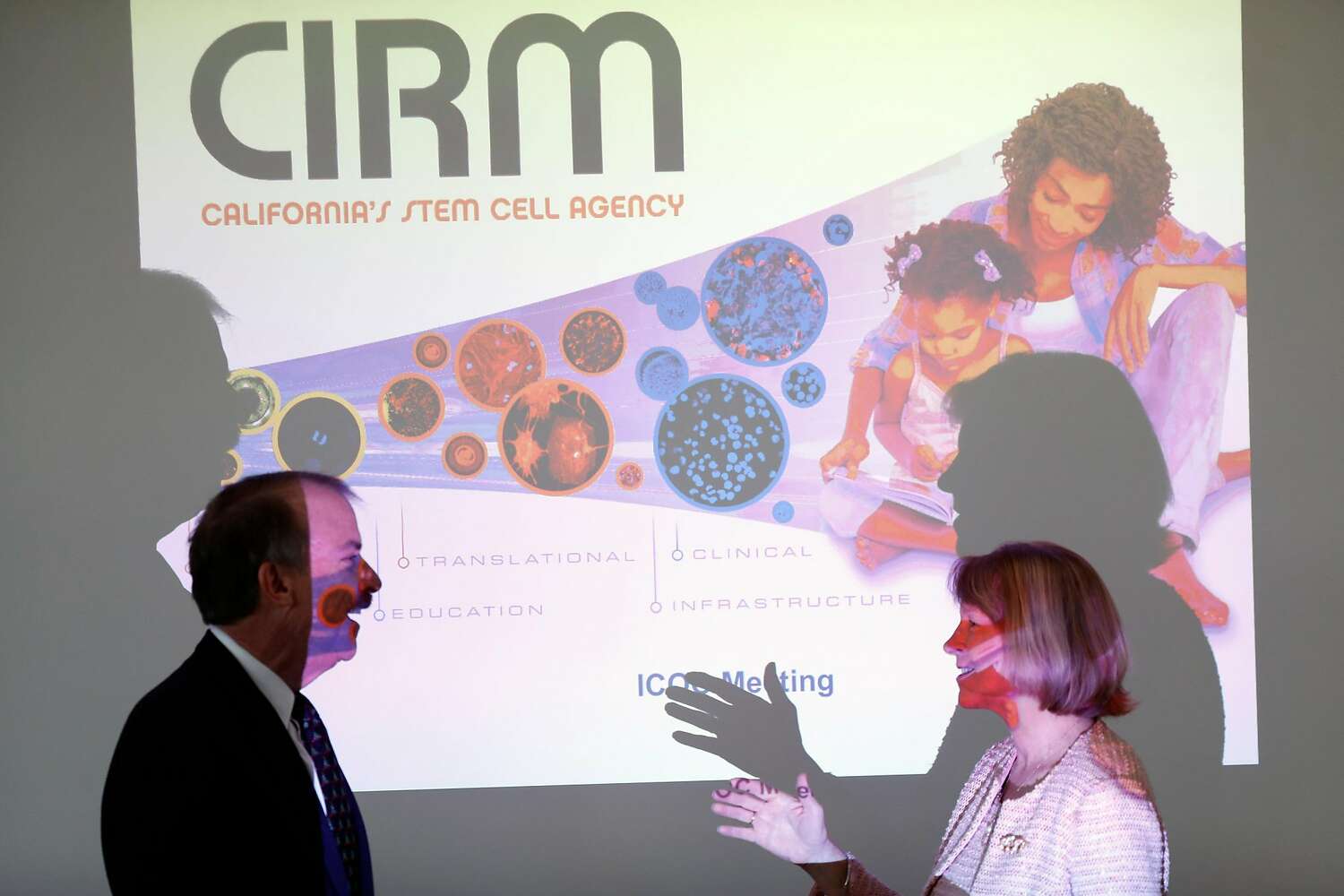
Jonathan Thomas, chair of the CIRM governing board, talks to lath member Anne-Marie Duliege during a meeting at which they discussed the bureau's financial future.
"What was promised was not deliverable," said longtime CIRM lath member Jeff Sheehy, a sometime San Francisco supervisor. "However, I would distinguish the promises from the affect and value. We have developed a regenerative medicine juggernaut."
Klein, though, is unapologetic about the entrada he led. Indeed, as he lines up advocates and testimonials for the coming entrada, his message is familiar: Fund this research and we volition relieve lives. Deadening information technology down and the consequences will be grave.
"Practise y'all desire your son to dice? Are y'all going to wait?" Klein asked recently. "Is that the toll you are prepared to pay?"
In his airy, sunlit lab at San Francisco's Gladstone Institutes, cardiologist Deepak Srivastava has used skin cells to produce heart cells. As they pulse in a petri dish, their steady, calming beat feels familiar, fifty-fifty viewed through the lens of a microscope.
Someday, he hopes, the work of his squad at Gladstone'south Roddenberry Stem Cell Middle volition lead to a therapy that can reverse the effects of a heart assault.
"We got this far purely considering of CIRM," said Srivastava, the center's managing director.
The dream of exploiting the human body'south remarkable power to heal itself — to grow skin and os, to replace muscle lost to wasting or illness, to undo systemic impairment caused by infection — has long captivated medical scientists. In the late 1800s, they began to doubtable that specific cells in the torso were responsible for this repair and regeneration work.
A century later, in 1981, UCSF scientist Gail Martin gave the most powerful of these cells a name: embryonic stalk cells.
It wasn't until 1998 that the beginning man embryonic stalk cells were isolated and replicated in a lab. These cells are uniquely potent, responsible for building every function of a human torso. As an embryo matures, it quickly replicates, transforming into bone cells and muscle cells, brain cells and middle cells.
Some doctors believed if they could harness stem cells, they could use them to treat all but the most disastrous threats to the body, perhaps even reverse the natural effects of crumbling.
The process of isolating them, though, involved destroying days-old embryos. Religious and antiabortion groups decried the science as unethical. In 2001, President George Due west. Bush instituted far-reaching limitations on federal grants for embryonic stem cell research.
In California, advocates for regenerative medicine sought a way around the funding restrictions. Their solution: Prop. 71, which would generate $3 billion in full general obligation bonds, the blazon more than often used for infrastructure projects like highways or dams. Including primary and involvement, the total cost to taxpayers would be roughly $6 billion.
State-funded scientific inquiry on that scale had never been attempted and, despite the campaign'due south pitch, there was no guaranteed payoff. The state Legislative Analyst's Office offered a cautious cess: The potential financial benefits were unknown.
Klein, then a major Silicon Valley programmer, helped excogitate, bankroll and write Prop. 71. For him, the endeavour was personal. His son, Jordan, had recently been diagnosed with Blazon ane diabetes, and Klein had become a ferocious abet for people with brutal weather and lilliputian promise.
More than 20 Nobel Prize laureates backed the proposal. And so did Hollywood celebrities such as Michael J. Play a joke on and Brad Pitt. 1000000-dollar donations came from the founders of eBay and the owner of the Cleveland Cavaliers basketball game team.
Radio and telly ads featured gut-wrenching appeals from people with incurable diseases. Patient abet Joan Samuelson, subsequently appointed to CIRM's board, said in ane ad that Prop. 71 "will rescue me, and a million people with Parkinson's disease."
In another, "Superman" actor Christopher Reeve, paralyzed from the neck downward after a horseback riding accident, said "stem cells have already cured paralysis of animals" and called them the "time to come of medicine." Dependent on a ventilator attached to his trachea, he struggled to exhale and to speak in the advertizing. He died earlier the spot aired.
A TV advertizing for the Prop. 71 entrada featured Christopher Reeve, who died a few weeks before information technology aired.
On November. 2, 2004, Prop. 71 passed by 59 per centum to 41 percent. It would accept years, though, for the unprecedented experiment voters had approved to fully launch.
Almost immediately, critics filed lawsuits. CIRM, the new stem prison cell constitute, lacked public accountability, they said. While technically it was a land agency, the measure gave the Legislature lilliputian direct oversight of it. The legal challenges somewhen were dismissed, just they slowed funding for about two years.
Meanwhile, the confident claims of the campaign were being tempered with more minor expectations. A year later on moving into its San Francisco headquarters, CIRM would unveil a x-year program dramatically scaling back the pledges made by Prop. 71.
The field of embryonic stem prison cell inquiry was all the same young, the study warned. The road to marketing new therapies would be long and expensive. Most inquiry never reaches human clinical trials, it explained, and nearly of those trials fail. Potential treatments for just a scattering of diseases might be tested, and it was doubtful that a single approved therapy would be developed from the state's investment.
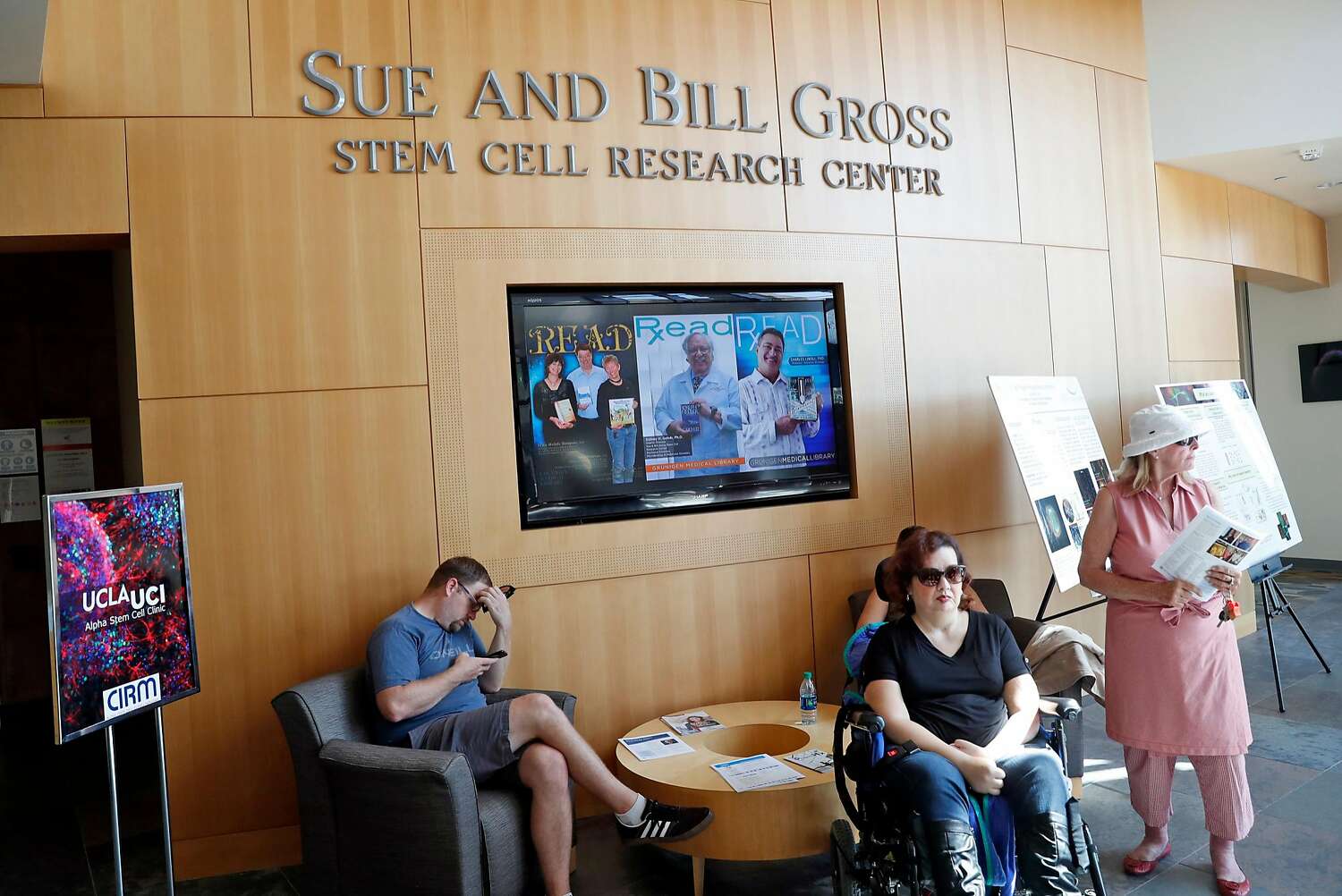
People await in the antechamber of UC Irvine'due south Gross Stem Jail cell Research Center during an open house. The building was funded in function by a $27.ii one thousand thousand grant from CIRM.
"The whole tenor of the campaign, what was said on television ads that flooded the state and by Bob Klein and his lobbying group, was that if California would fund this piece of work, in that location would exist cures," said Marcy Darnovsky, executive director of the Center for Genetics and Society in Berkeley. "People that were saying that must take known you tin can't schedule medical breakthroughs. Those hopes were just that, hopes, and completely speculative."
But as CIRM ramped up, The Relate'south review shows, it began doling out grants at a furious pace, averaging more than $vii million a calendar week in 2008, its start yr of full-fledged functioning. To date, CIRM has spent or committed more than 90 per centum of its $3 billion assart.
The grants can be broadly divided into four categories: bones science and preparation; infrastructure; translational and preclinical, which is the piece of work that goes toward moving laboratory science into homo studies; and clinical trials.
The Chronicle reviewed CIRM grants through May 2018, tracking who received money and how it was spent.
Bay Surface area institutions accept been peculiarly well-funded, with more than one-fifth of the bond money funneled to Stanford, UCSF, UC Berkeley and the Gladstone Institutes. Stanford, the biggest beneficiary, has received $360 million in grants. CIRM's funding of Stanford, a private institution supported by a hefty endowment, has at times been sharply criticized.
Following the Coin
In 2004, California voters approved Proposition 71, which ready bated $three billion in bond money toward funding stem cell inquiry. Since then, the California Institute for Regenerative Medicine has spent or earmarked $2.75 billion.
Hover over the chart or colored text below.
Click on the chart below.
Grants take been awarded in these main categories: bones research, education, infrastructure, preclinical/translational – which is focused on shifting basic scientific discipline work into human trials – and clinical trials.
The majority of the money has gone to public universities and colleges.
Individual universities like Stanford take also won big.
The remaining grant money has gone to research institutes and for-profit companies.
Emma O'Neill / The Relate
Source: California Constitute for Regenerative Medicine
Notation: Recipient list is not complete. All data are through May 2018. Roughly $40 million in CIRM loans was not included. Grants to research institutes include some pocket-size conferences.
* Includes Sanford Consortium and Sanford-Burnham
** Quintiles now called IQVIA.
Virtually 40 percent of the full bond coin, more than $1.1 billion, has gone into grooming programs and bones research — work largely aimed at improving scientists' agreement of stem cells and how they might be best used in medicine.
About the science
Christine Dark-brown at the Urban center of Hope in Duarte (Los Angeles Canton) is studying malignant glioma, aggressive brain tumors that have a high likelihood of recurrence because stem cells in the tumors are oft resistant to traditional cancer therapies. Her squad is seeking ways to trigger a patient's ain immune organisation to assault the cancer stem cells, using a type of immune jail cell chosen a Car T-cell that's recently been used to fight blood cancers. And then far, patients treated with a therapy adult from this research accept shown encouraging results; one patient'southward tumors regressed completely.
About the science
Scientists build then-called organoids by turning adult cells — similar pare or blood cells — into stem cells so into cells from whatsoever organ they desire to report. These organoids allow them to study difficult-to-reach places similar the brain, and to create models of brains affected by disease. Earlier this year, A team of scientists from the Salk Plant in La Jolla (San Diego Canton) this year transplanted a encephalon organoid into a mouse, which may improve their ability to study brain activity in a natural environment.
These basic biology studies have helped scientists develop techniques that could preclude allowed rejection from an organ transplant. They discovered weak points in cancer stem cells that might become new targets for drug therapies. In addition to Srivistava'due south beating heart cells, scientists have used stalk cells to build mini-organs, including "brains" in petri dishes for testing drug therapies and learning more about diseases like Alzheimer's.
CIRM's focus, meanwhile, has expanded beyond embryonic stem cells. It has funded research involving adult stem cells, which be in pockets throughout the torso and are cheaper and less controversial than embryonic stem cells. It'south besides invested in induced-pluripotent stem cells, first developed in 2006. Produced from other types of cells, they look and act like embryonic stem cells.
CIRM-funded researchers accept published more than 330 scholarly articles in four of the almost respected stalk jail cell and academic journals. Each represents a new discovery in the field and has enabled the work California has funded to reach scientists around the world.

Todd Trumbull / The Relate
CIRM's investments in infrastructure have amounted to $482 one thousand thousand — 16 percent of the bond money. Nearly of that went toward building a dozen stalk prison cell inquiry centers.
UCSF received a $35 million grant to assist raise a glass-and-metallic structure on the hillside overlooking its Parnassus campus. The independent Cadet Institute for Research on Aging received $twenty million toward a sleek white building on its Novato grounds. Stanford University won the largest unmarried grant: $43.vi million toward a four-story structure at the edge of its medical school campus built around a glass-walled atrium.
Nearly $388 million has gone toward preclinical and translational research: studies that take scientific discipline out of the lab and try to apply it to humans. This phase of research, seldom backed by the federal government, can exist particularly challenging. A therapy that looks promising when tested on a cluster of cells in a laboratory-controlled environs frequently fails when given to more complex organisms.
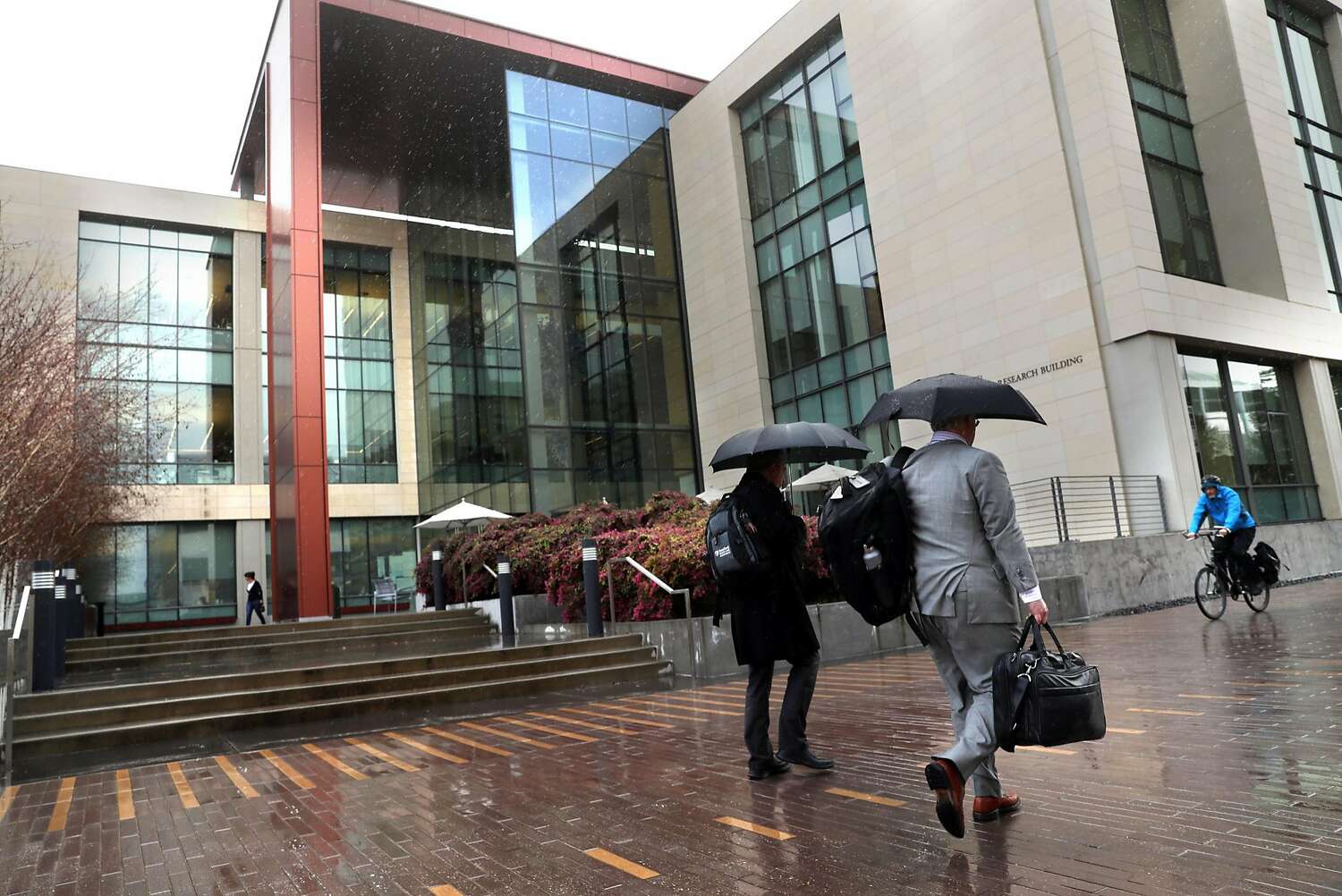
Stanford's Lokey Stalk Prison cell Research Building was funded in part by a $43.6 million grant from CIRM — the largest unmarried grant the agency has awarded.
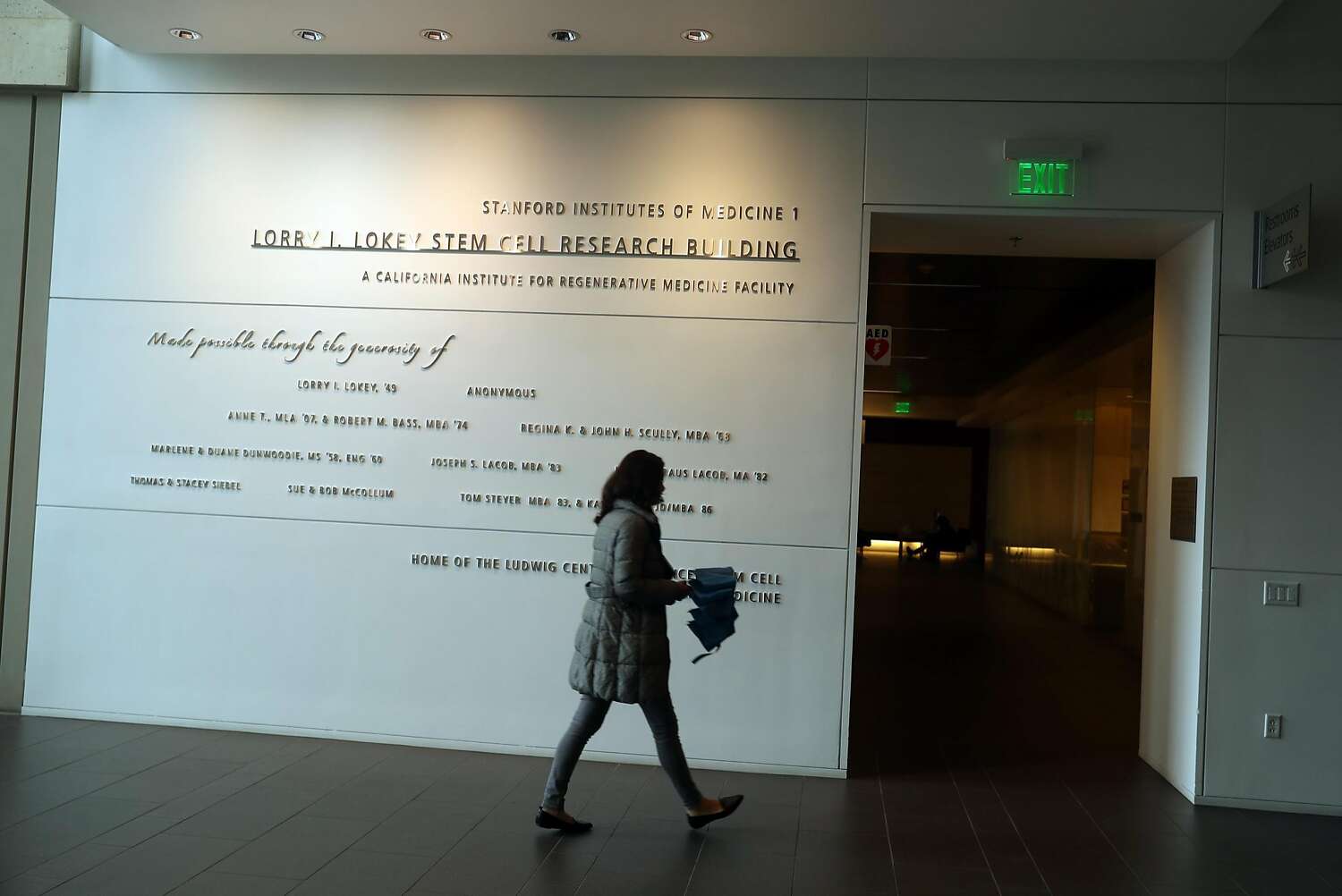
On a wall in the main lobby of the Stanford stalk prison cell building is written: "A California Institute for Regenerative Medicine Facility."
About the scientific discipline
Peripheral avenue illness occurs when the arteries that supply blood to the legs go narrow or blocked entirely. The gel, taken from pig skeletal muscles, contains structural materials that form a scaffold when they're injected into a subject. That scaffold lures stem cells and encourages growth of muscles and blood vessels. In animal studies, the gel increased the diameter of large blood vessels. The research, led by bioengineer Karen Christman, was done at UC San Diego.
The preclinical studies funded so far reflect the immense possibilities stem cells offer: Scientists take examined a cistron-modifying technique to attempt to treat HIV. They're studying small molecule drugs that could destroy leukemia stem cells. They're developing a gel derived from pig muscles that could stave off amputations among people with a illness that weakens blood circulation.
The research has helped CIRM-backed scientists license 107 invention disclosures. Some of the studies have paved the manner for clinical trials, while others have hit dead ends.
CIRM funding helped push UC Irvine scientist Henry Klassen's work from lab studies to clinical trials testing a stem cell therapy for a rare form of incomprehension. His research, which has shown success, has largely been carried out in a building at UC Irvine partly underwritten by CIRM.
"The whole reason I'm here in California is because of CIRM," said Klassen, who had been working in Singapore and took a job at Irvine shortly later on Prop. 71 passed. "This consistent source of funding has been critical as we go from the bench to the bedside."

The Broad Center of Regeneration Medicine and Stalk Cell Research perches above UCSF's Parnassus campus. It was funded in part by a $34.8 million grant from CIRM.
Still, critics and supporters alike say those who pushed Prop. 71 significantly oversold the short-term medical and fiscal prospects of stem cells.
No federally approved treatments take been produced. And without marketable therapies, the public is still far from reaping the upwards to $91 billion in wellness care savings by 2040 the campaign predicted.
CIRM has funded virtually l clinical trials, but just four have been completed, meaning scientists enrolled all the patients they said they would and finished compiling data. One of those trials was an observational study that tested no new therapy. The others involved treatments that are however years, at best, from reaching the market.
The state, once told to expect equally much every bit $i.1 billion in royalties from CIRM-backed discoveries within 35 years, then far has received just a tiny fraction of that amount: a single payment of $190,000 from the Urban center of Hope medical research center in Los Angeles County.
Other economical benefits, such equally tax revenues and new jobs, take been measured only a scattering of times. The most recent study, which CIRM commissioned using public funds and published in 2012, showed the state investment had helped create tens of thousands of jobs and generate hundreds of millions in taxation acquirement.
The aim of the study, however, was to aggressively back up the goals and initiatives of CIRM, co-ordinate to the California Stem Prison cell Report, a blog that has diligently tracked the institute.
CIRM and its 29-person governing lath, meanwhile, take been a frequent target of attack.
State lawmakers accept introduced multiple bills aimed at making the institute more answerable to the public and at ensuring that all taxpayers, not merely biotech companies and universities, would benefit from the public investments.
Almost every effort has failed, in part due to the unusually restrictive language of Prop. 71: Whatever change in CIRM'south structure needs a voter initiative or a 70 percentage vote in both houses of the Legislature and the governor'due south approval.
The proffer also specified the precise makeup of the bureau's governing board, placing representatives of many of the institutions that CIRM funds to oversee its grants. Having such built-in conflicts of interest without the oversight expected of a public agency has undermined CIRM's legitimacy, critics say. They have likened information technology to an insiders' gild that enriches its own members.
"These guys got away with an incredible amount of personal enrichment," said country Sen. John Moorlach, R-Irvine, a longtime critic of CIRM. "And all they gave united states was debt."
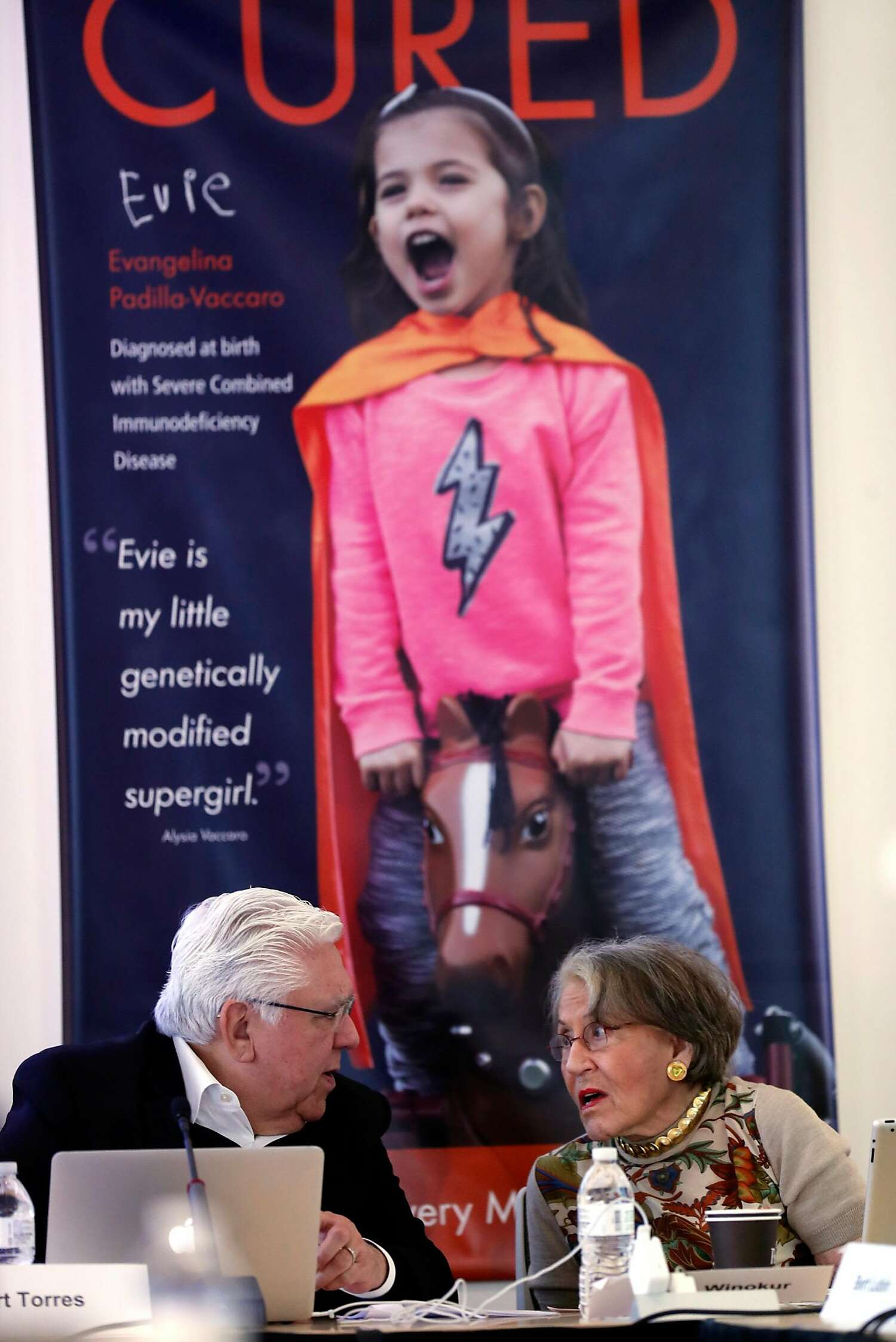
Fine art Torres, vice -chair of the CIRM governing board, talks with board member Diane Winokur during a meeting at the agency headquarters. Above them is an image of a child who was cured of a rare immune deficiency disease using a stem cell therapy partly funded by CIRM.
CIRM leaders say they accept strong protections to ensure that personal interests don't influence funding decisions: Board members don't discuss or vote on proposals they have a financial stake in, and an out-of-country review panel has a major say in which projects are funded.
Multiple audits, however, have found the sheer volume of recusals troubling.
Records obtained by The Chronicle showed that board members abstained from voting on grants roughly ane,770 times since 2006 due to reported financial conflicts. Tens of thousands of additional recusals were triggered by a CIRM policy that confined sure members from weighing in on any application.
In some cases, virtually half of the board was unable to vote on major and controversial proposals due to conflicts of interest.
One lath member, UC Regent Sherry Lansing, a onetime pic studio executive, has recused herself from more 400 grant discussions because of a tangle of conflicts, most related to the universities she oversees. Lansing's function is to advocate for cancer patients.
A pivotal Constitute of Medicine review in 2012 establish that such widespread conflicts had acquired some to "question the integrity and independence" of CIRM, and information technology recommended sweeping reforms. Many of the suggestions were not enacted, although CIRM did make some significant changes shortly after the report published.
Klein, CIRM'south lath chairman during its offset 7 years, has been a divisive figure. Despite his role at CIRM, he connected to run a patient advocacy group that regularly dismissed concerns nigh the agency and attacked many people, including legislators, who challenged it. A 2009 Little Hoover Commission written report called him "a lightning rod for calls for more accountability." In that location were multiple demands for his resignation.
"There'due south a reason you have checks and balances, transparency and accountability when you use that much in public funds, and unfortunately none of that was in identify," said former state Sen. Deborah Ortiz, who strongly supported Prop. 71, and so became a CIRM critic. "You can't go to the voters and say, 'Let's use $3 billion in state funds,' then say, 'Nosotros don't want the terrible authorities to bother u.s.a..' "
Fifty-fifty some of CIRM'south most agog supporters — patients and patient advocates who stand to benefit most directly from stem cell therapies — take go critical. Their chief complaint: The scientific discipline is taking too long, and they're running out of time.
At the Gladstone Institutes' Mission Bay campus terminal fall, CIRM held a public coming together to update patients about the inquiry going on throughout California.
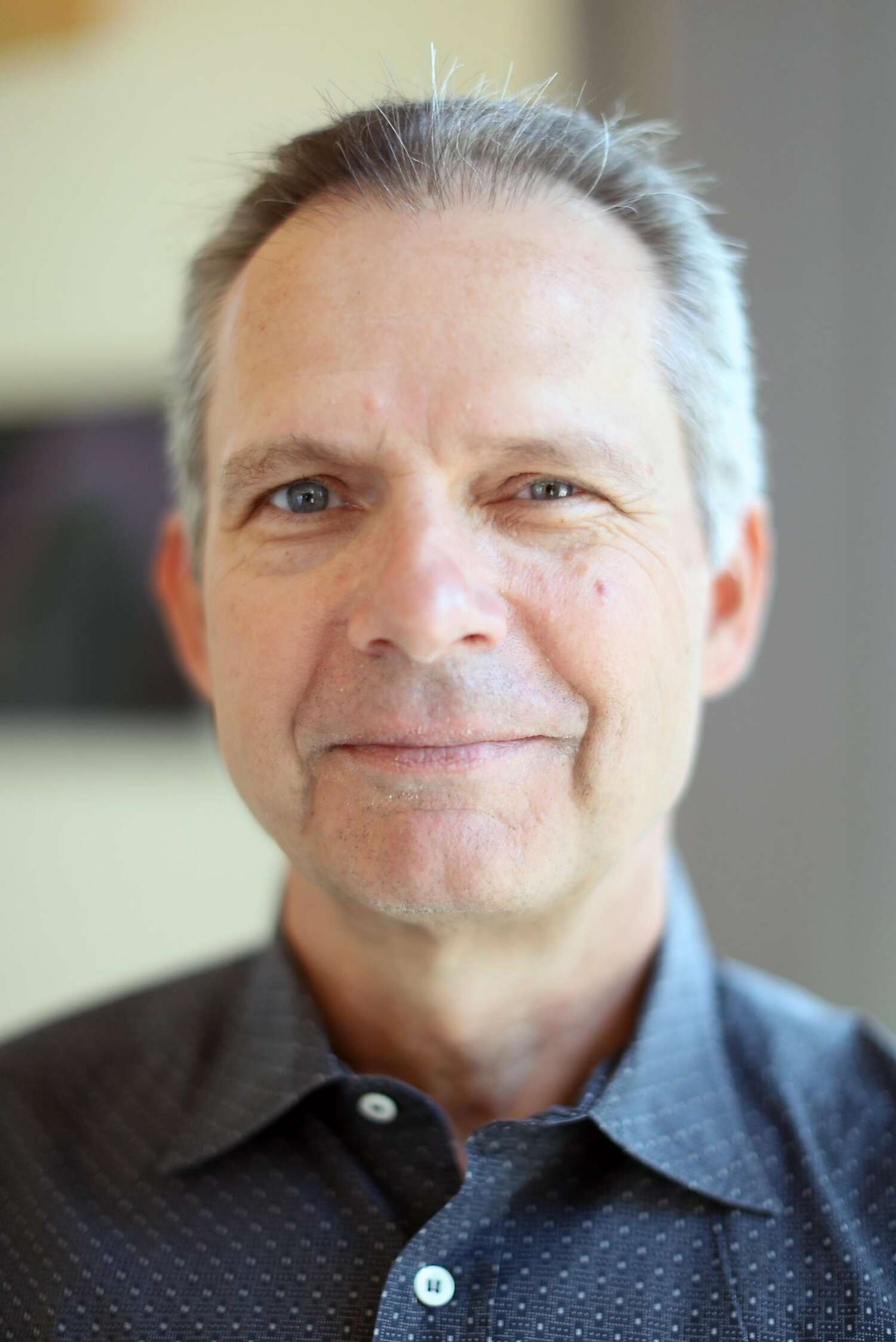
UC Irvine scientist Henry Klassen runs a clinical trial using stem cells to care for a class of blindness.
CIRM representatives and scientists told the story of a female parent who had her vision partially restored after enrolling in Klassen's trial at UC Irvine. They talked nigh an East Bay teenager, paralyzed the twenty-four hour period before graduating high school, who regained some movement after receiving a stem cell transplant.
The $3 billion bond, they said, had made these achievements possible.
"What y'all will see over the adjacent decade," Srivastava of the Gladstone Institutes told the crowd, "are a series of breakthroughs for many diseases based on that investment."
Not everyone shared his enthusiasm.
"I've met hundreds, thousands of people with spinal cord injuries," Franklin Elieh, a quadriplegic man and patient advocate, said at the same meeting. "Millions are suffering needlessly and incessantly. Billions (of dollars) are being spent needlessly and incessantly. What tin be done to really accelerate this?"
Elieh, like many people living with incurable diseases or weather, is disillusioned with the famine of clinical trials CIRM has backed.
Clinical trials are the goal of laboratory medical science. They are the moment that a possible handling, studied only in a exam tube or a dish or an fauna, finally is tested on a human subject.
The start two trial phases primarily test condom: Does this treatment, when given to a human existence at an effective dose, crusade intolerable side furnishings? Phase 3 trials are typically the first to tell scientists how well a therapy works in large groups of patients, if it works at all. They are often the last step earlier scientists — usually working with a for-turn a profit visitor that has financed the increasingly expensive research — seek FDA approval.
About 900 patients take been involved in the 49 clinical trials CIRM has backed and so far, The Chronicle'southward review shows. Near a fifth of CIRM's funds, nigh $530 meg, has gone to back up the trials. Most of those grants were awarded in the past three years, part of a deliberate attempt by the bureau to direct more than coin toward testing treatments.

CIRM President Maria Millan listens during a board coming together in December, at which she gave a presentation on the bureau's fiscal outlook.
"Every single project nosotros have is spectacular, and just a couple of years ago may accept been considered science fiction," CIRM President Maria Millan told a state legislative commission in Baronial equally she outlined many of the clinical trials the bureau has funded.
But six of the clinical trials, though, have been stage three studies. Of those, two were terminated or suspended, three are still recruiting patients, and i — for a bioengineered claret vessel that tin exist used in dialysis — is under way.
Meanwhile, the National Institutes of Health, the primary federal funding bureau for medical research, has far outpaced CIRM in supporting clinical trials in stem cell research. A 2017 assay by STAT, a science and wellness news publication, constitute that, dollar for dollar, the NIH funded 3 one/2 times every bit many clinical trials as CIRM from 2006 to 2016.
In 2009, President Barack Obama lifted most of the restrictions on federal funding of embryonic stem cell research, just for both agencies, trials using those cells remain rare.
"When we voted for Prop. 71 we wanted clinical trials, we didn't want basic inquiry," said Judy Roberson, a longtime CIRM supporter who has lost 5 family members, including her hubby, to Huntington's disease. Roberson has 17 other relatives who are likewise at high risk of developing the hereditary neurological disorder, which slowly erodes a person's ability to walk and talk.
"Our loved ones are going to die. They're sitting on time bombs," she said. "You could do basic research for 100 years, simply you're never going to acquire everything. And then just get in there and effort something."
But accelerating the push of basic scientific discipline toward human trials is not without its critics. The International Society for Stem Prison cell Research — the largest trunk of scientists looking at policy and politics in regenerative medicine — has cautioned against that arroyo. Many scientists say that, in general, information technology's too early to be experimenting on people, especially with embryonic and induced-pluripotent stalk cells, which may crusade tumors.
Gene therapy, a field related to stem cells, underwent more than 30 years of grueling research and repeated setbacks earlier establishing its first commercial successes in 2017: two cancer treatments approved by the FDA.
Embryonic stem cells were isolated for the first time just two decades ago. Induced-pluripotent stem cells were fabricated merely 12 years ago. Developed stem cells — the cells responsible for regular repair and budget — have been used in bone marrow transplants for more than than 50 years, but their application across that started to be deeply studied merely in the 1980s.
The science simply isn't there yet, said Arnold Kriegstein, caput of UCSF'south stem cell center, who has received $ii.v 1000000 from CIRM for bones research.
"CIRM touts 50 or then projects moving toward the clinic, and many of them will likely neglect," Kriegstein said. "It might exist more prudent to spend dollars solving basic enquiry bug, where a relatively modest investment can have a huge impact."
Some suggest that CIRM's recent aggressive back up for clinical trials is directly tied to its programme to return to voters for more funding. The fact that its work is supported by taxpayers increases the urgency to produce results, said Timothy Caulfield, a Canadian police force professor at the University of Alberta who closely follows CIRM.
"That creates a lot of pressure to frame the piece of work in terms of nigh-future miracles, and that will nigh e'er fail," Caulfield said. "Truthful medical breakthroughs with wide application are incredibly rare."
To patients desperate for cures, CIRM leaders say stay hopeful. The work may be taking longer than promised, but it will pay off in the end. And the state has too much invested now to requite upwardly. Such hope, though, isn't easy to come by for those starting time to realize that any therapies to assistance them probably will arrive too late.
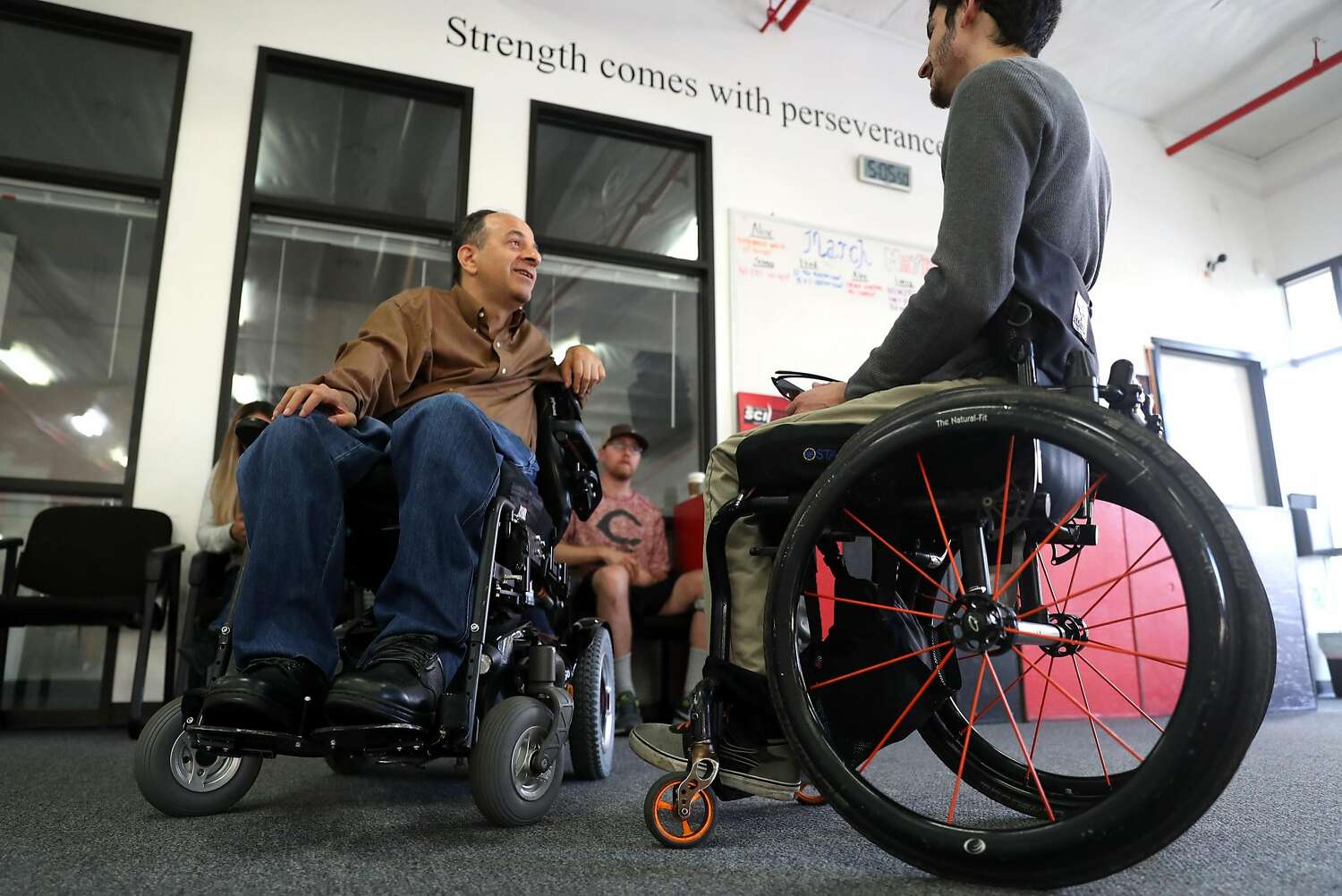
Franklin Elieh (left) chats with Steve Sanchez before a back up group coming together for people with spinal cord injuries. Elieh has been disappointed with the progress of stem cell therapies for patients similar him.
"Nosotros see how ho-hum progress is, and nosotros know a lot of people are never going to be candidates for a treatment," said Elieh, who is co-founder of the Northern California Spinal Cord Injury Foundation, a nonprofit patient back up grouping.
Elieh, 54, was injured in a diving accident in 1989, shattering his vertebrae and damaging his spinal string then badly that he lost movement in his legs and upper trunk. In the years later, he enrolled in clinical trials and costly rehab programs, but none helped.
During the Prop. 71 campaign, Elieh watched celebrities talk about the miraculous ability of stalk cells to regenerate tissue. He saw videos of paralyzed rats that could walk once more later receiving an injection of stem cells. Clinical trials, scientists said, were but years away.
"Everyone you lot talked with thought, 'Wow, we're going to put $3 billion into this,' " Elieh said. "It was really creating hope. And, unfortunately for me, false hope."
Over the past decade CIRM has funded two clinical trials testing the same treatment for spinal cord injuries. The therapy, though, applies only to people newly injured, non the hundreds of thousands of men and women like Elieh who accept been paralyzed for years.
And then far, the therapy has proven safe. A scattering of patients in the 2d trial regained some move, though it'south too soon to say whether stem cells are the reason. While CIRM supporters are not bad to hold up that trial as an example of the stunning potential of stem cell therapies, Elieh and many of his peers are more cautious.
"We've still barely taken the first pace, and we take no idea when the second stride will state," Elieh said. "We all had a lot of hope back then, and nosotros've just kept hoping."
Seated on a phase before 50 people in a town-hall-mode meeting in Manufacturing plant Valley, Art Torres had one word to describe the results of the CIRM-funded trial for spinal cord injuries: "Miraculous."
Torres, former state senator and long-time member of the CIRM board, was enthusiastic in a way that would have made the more than cautious scientists running the trial cringe. But CIRM needs a dwelling house run.
The looming end of its funding — and the need to ask voters for billions more than — presents an existential moment.
Since 2004, the political and scientific climate has changed significantly. Federal funding for embryonic stem cell research is no longer tied up, and many voters are savvier near the limitations of regenerative medicine. The scientists backed by CIRM, meanwhile, face unconventional contest from an unexpected source: a vibrant consumer-clinic industry that's marketing unproven therapies to those tired of waiting for cures.
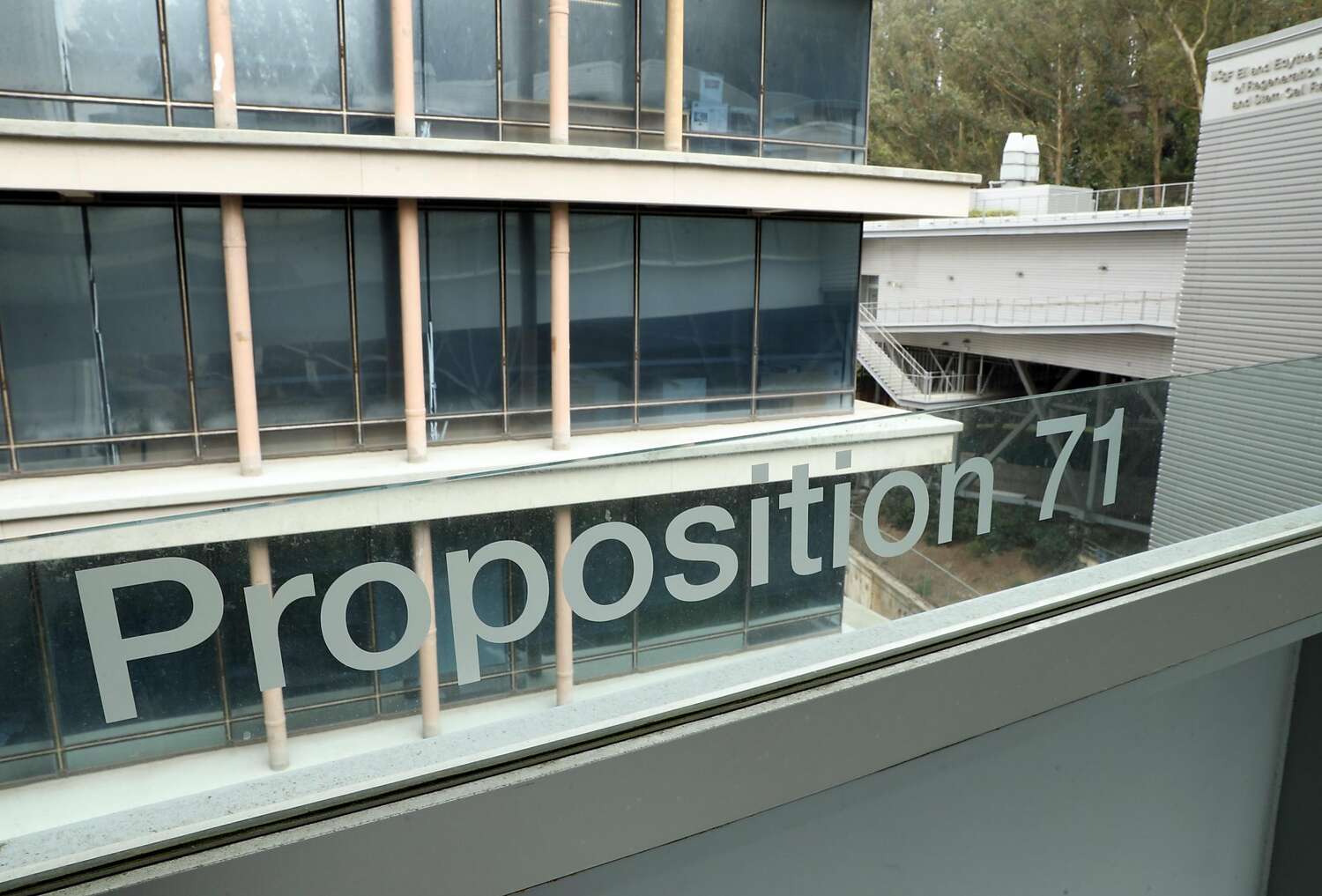
The words "Proposition 71" adorn an outdoor walkway at UCSF'south stalk jail cell edifice.
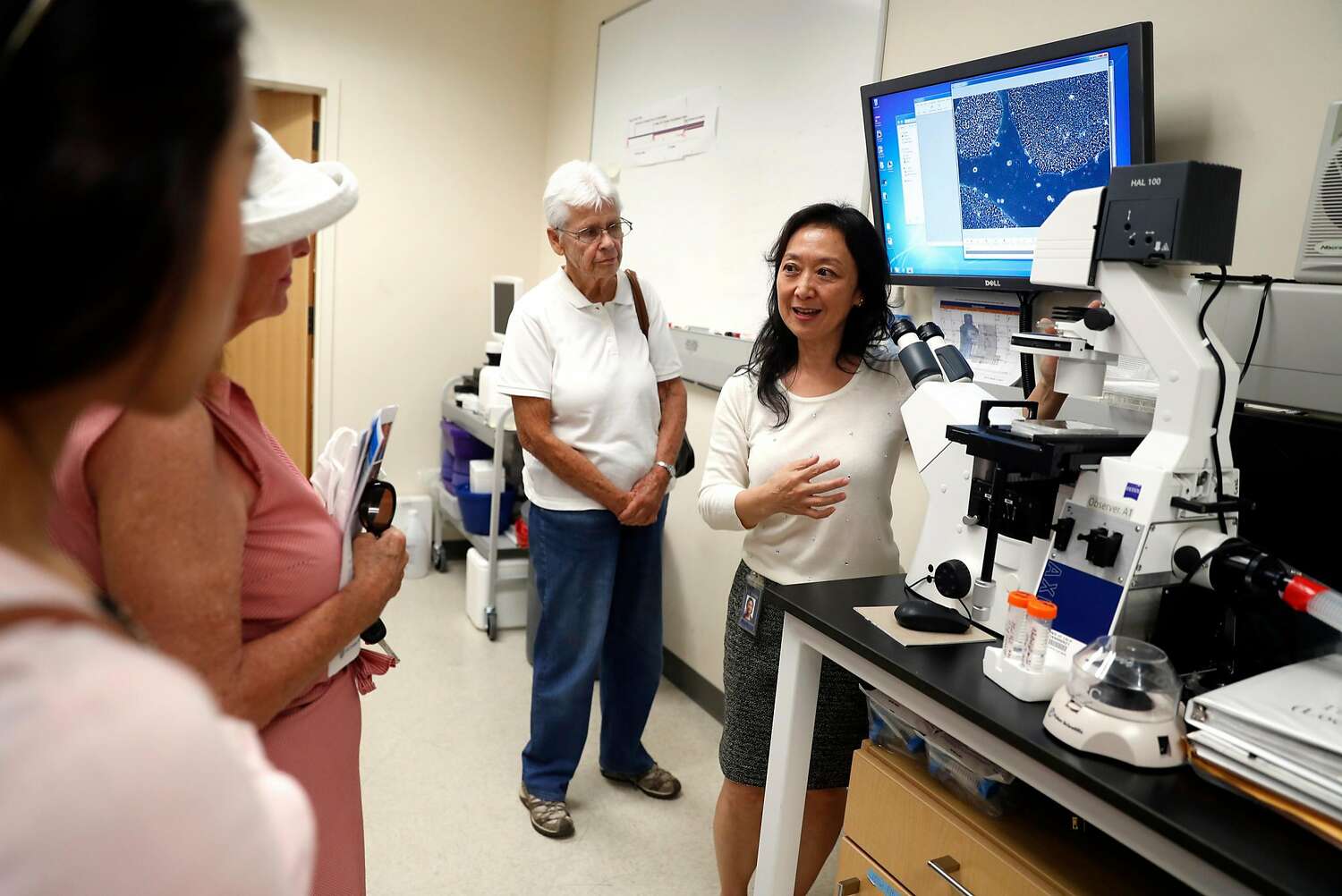
Christina Hui-Hsun gives a tour of her lab during a public event at the Gross Stem Cell Research Center at UC Irvine.
Prop. 71's most tangible achievements — cutting-border academic buildings, discoveries in petri dishes, advances in lab rats, pioneering trials in human subjects — aren't necessarily going to resonate with voters. What will are visible triumphs in existent people. Those successes are what CIRM's most agog supporters are rallying effectually.
On the comprehend of the agency's 2017 annual report was a wide-eyed infant named Ronnie. He was cured of an immune deficiency affliction chosen SCID, or "bubble-baby affliction." Children who have the condition typically live in isolation to protect them from fatal infections.
CIRM has helped fund four trials, all at different institutions, testing stem cell therapies for SCID. Ronnie was treated at UCSF using a treatment developed at St. Jude Children's Research Hospital in Tennessee. A therapy out of UCLA, which has been in clinical trials since 1993, could win FDA approval — a first for CIRM-backed research — in a yr or 2, say the scientists who developed the treatment. In all, 40 babies have been treated with the UCLA therapy.
And there's Rosie Barrero.
In a video posted on CIRM'south website, Barrero sits in a sunny room at the agency's headquarters, now in Oakland, Lake Merritt glittering behind her. She'south earnest as she talks nigh retinitis pigmentosa, the disease that has slowly blinded her.
Barrero was treated in 2016 in Henry Klassen'due south trial for patients with RP. Within months, she could choice out colors and shapes she hadn't been able to meet for years. She could tell her daughters apart. She has regained about "a pinhole" of sight, but that she's had any improvement at all, she said, is astonishing: It ways that the therapy works.
"Nosotros're definitely hoping that this work continues to get funded," Barrero said in an interview. "Information technology's incredibly important, to all of usa."
If a new bail isn't approved in 2020, said CIRM President Millan, it could devastate stem cell research in California. Private industry is all the same reluctant to back enquiry that has yet to produce a treatment, permit alone show it can exist profitable.

Rosie Barrero (right) talks with her daughter Amelie at their home in Pasadena. After getting a stem cell therapy to treat incomprehension equally function of a CIRM-funded clinical trial, Barrero was able to tell her two daughters apart for the first time in years.
And and then, CIRM proponents are turning again to Robert Klein, who plans to pb the 2020 campaign for more research dollars.
In Klein's downtown Palo Alto office, a serial of photos — colorful, fantastical close-ups of stem cells studied by CIRM scientists — hangs above his desk-bound. Once they'd hung in CIRM's offices. Today they reflect the deep connection he's retained with the agency, despite not having an official role since stepping down as lath chairman seven years ago amongst a flurry of criticism.
Late last twelvemonth, Klein addressed the CIRM board at a meeting about the fate of the agency. According to polls he had paid for — the full results of which he declined to share — 70 percent of voters would support some other stem cell funding proposition. No other options for future financing — not private fundraising, not legislative efforts — would piece of work, he said.
It was his son Jordan's battle with Type i diabetes that drove Klein into patient advocacy and stem cell inquiry. But the therapies that Klein believed were imminent did not arrive in time to salve Hashemite kingdom of jordan. Two years ago, at age 26, he died from complications related to the disease.
The loss seems to have cemented Klein'southward resolve.
"We couldn't get at that place fast enough for Jordan," Klein said. "Nosotros have to get there for anybody else."
Klein rejects the notion that expectations for CIRM were overhyped or voters misled in the 2004 campaign. If cures aren't however at paw, they're surely years closer than they would exist without CIRM, he said, and people already are benefitting from enquiry paid for by Prop. 71.
During an interview in his function, Klein played a brief video of a young homo who is office of the spinal cord injury trial CIRM has helped fund. Fabricated quadriplegic after a devastating car accident, the man is shown in the video lifting weights.
"Afterward the stalk cell surgery, I'm able to live my life over again," the man says in a quiet, halting voice. "Cheers for giving me my life back."
Klein turned off the video, his eyes vivid.
"I wish all the voters could run into this," he said. Christopher Reeve, whom he considered a friend, "would take been absolutely ecstatic" to have seen such a video, he added.
"In 2004 we had a vision of the future and information on animals," Klein said. "In 2020, we will have patients who were paralyzed, patients who were blind, patients with cancer who will tell their story. The public will make up one's mind."
Source: https://projects.sfchronicle.com/2018/stem-cells/politics/
Posted by: cortesdaut1955.blogspot.com
0 Response to "How Much Money Do We Spent On Stem Cell Research"
Post a Comment